Nevada has a way of making silence feel loud. It’s a feeling that lingers long after the road straightens and the radio fades.
Once you leave the interstate, the state opens into long, unbroken stretches of high desert where old mining towns cling to the landscape like half-remembered stories. It’s here — among weathered headstones, saloons with bullet-scarred walls, and hotels built for people who never planned to leave — that Nevada’s paranormal reputation feels less like a novelty and more like an extension of its history. The state’s haunted towns aren’t just curiosities. They’re records of ambition, risk, and reinvention.
My partner and I flew into Reno and set out on a four-day trip through some of the Silver State’s most storied towns: Virginia City, Tonopah, Goldfield, and Boulder City. On paper, the route reads like a greatest hits list for ghost hunters. In reality, it’s a slow, absorbing drive through Nevada’s boom-and-bust past, best experienced with time, curiosity, and a willingness to sit with the quiet.
Traveling this route by car allows you to feel the distances between places and understand why towns rose where they did and why so many disappeared just as quickly. In an era of constant connectivity, there’s something grounding about driving through the high desert, where cell service fades and history takes center stage. Paranormal stories may draw you in, but it’s the landscape and the human stories etched into it that linger long after the trip ends.
Before you go: Quick and dirty tips for your haunted Nevada road trip
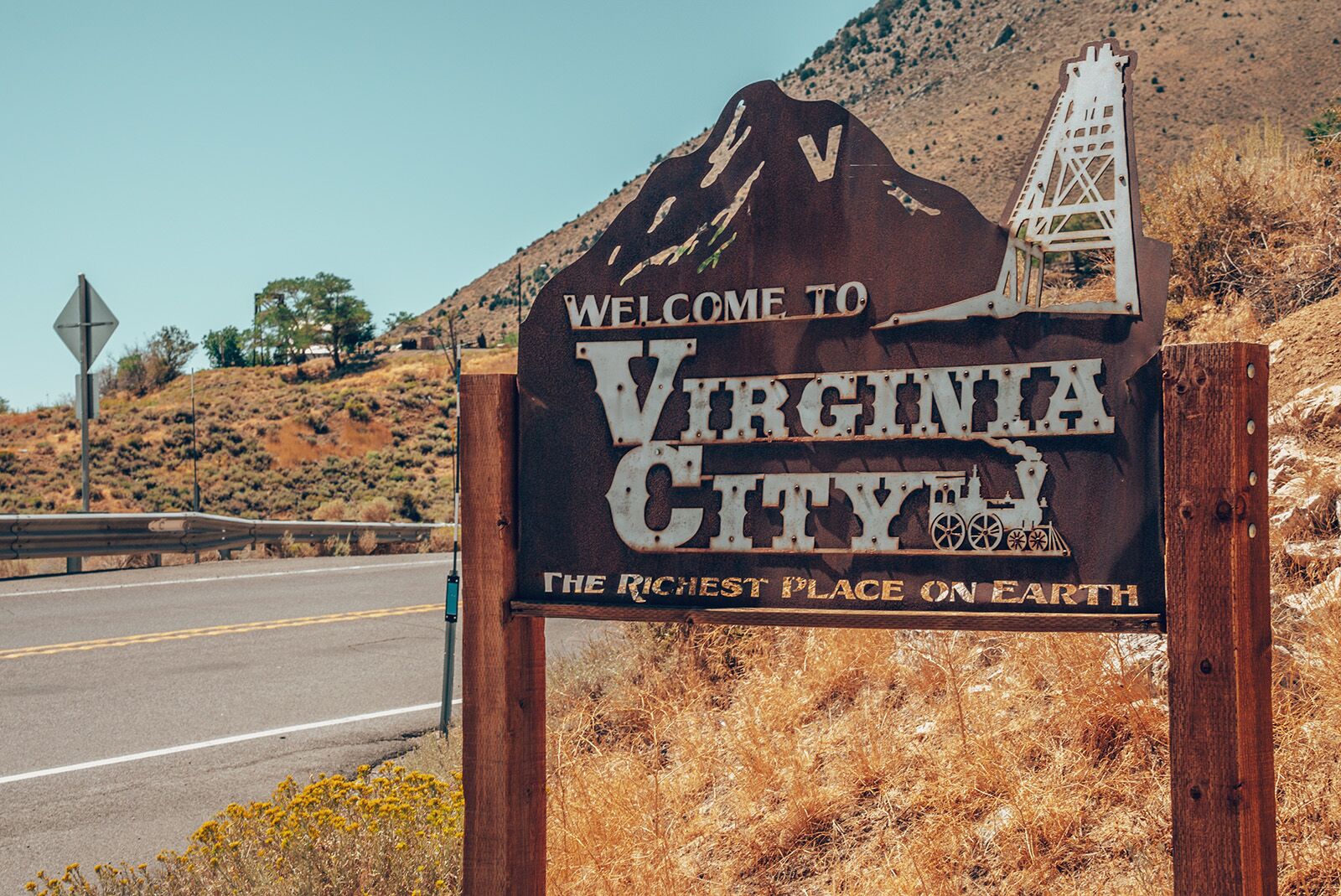
Photo: Pandora Pictures/Shutterstock
Drive times
- Reno to Virginia City: about 45 minutes
- Virginia City to Tonopah: about 3 hours
- Tonopah to Goldfield: about 1 hour
- Goldfield to Boulder City via Beatty and Rhyolite: about 3 hours
When to go
Fall is the ideal season for this road trip, especially during spooky season. Crisp desert mornings and cold nights heighten the atmosphere, and many of the towns decorate for the holidays, adding an unexpected festive glow to places already steeped in history. That said, this route is eerie year-round. Note that temperatures drop quickly after sunset, even outside of winter.
What to pack
Bring layers, especially for evenings. Comfortable shoes are essential since historic towns are often uneven underfoot. Snacks and drinks are helpful, particularly for vegetarians and vegans. Stopping at Sprouts Farmers Market in Carson City before heading to Virginia City makes the rest of the trip much easier.
Day 1: Virginia City and the Comstock Lode’s afterlife

Left: Virginia City. Right: Silver Queen Hotel. Photos: David Duran
The Comstock Lode was the first major silver discovery in the United States, uncovered in 1859 beneath what would become Virginia City. Almost overnight, this remote stretch of Nevada transformed into one of the wealthiest places in the world. Miners, engineers, and opportunists flooded in, and fortunes were made and lost at a staggering pace.
Silver from the Comstock funded banks, railroads, and public works across the West and accelerated Nevada’s path to statehood, earning it the nickname The Silver State. But that wealth came at a steep cost. Mining was dangerous, fires and cave-ins were common, and many who arrived chasing opportunity never left. That tension between prosperity and loss still defines Virginia City today.
We spent the afternoon wandering without an agenda, drifting between landmarks like Mackay Mansion and Piper’s Opera House, where Mark Twain once worked as a reporter. Even the quieter corners of town feel charged. At Silver Terrace Cemetery, ornate headstones rise from the hillside, their inscriptions stacked tightly together as if the dead were still competing for prominence.
That evening, we joined a ghost tour that began at the Washoe Club, a towering brick saloon often cited as one of the most haunted buildings in the West. After the walking portion of the tour, we opted into a second experience inside the club itself. The lights were turned off completely for a guided walk through the former Millionaires Club, conducted entirely in darkness.
Standing in pitch-black rooms once reserved for Nevada’s elite, every sound felt amplified. Footsteps echoed. Floorboards shifted. Without light, it became impossible to tell whether what you were feeling was imagination or something else entirely. Skeptic or not, it was deeply unsettling in the best possible way.
That night, we checked into the Silver Queen Hotel, Virginia City’s oldest lodging. Our room was tiny, barely large enough for the bed, but that intimacy felt appropriate. Built in 1876, the hotel carries the weight of generations. Outside our window, the desert stretched endlessly, and once the town quieted down, the silence was complete.
Fun fact: the Silver Queen Hotel houses a wedding chapel inside its saloon. If you want to add a haunted desert wedding to your itinerary, you totally could.
Day 2: Tonopah and the weight of isolation
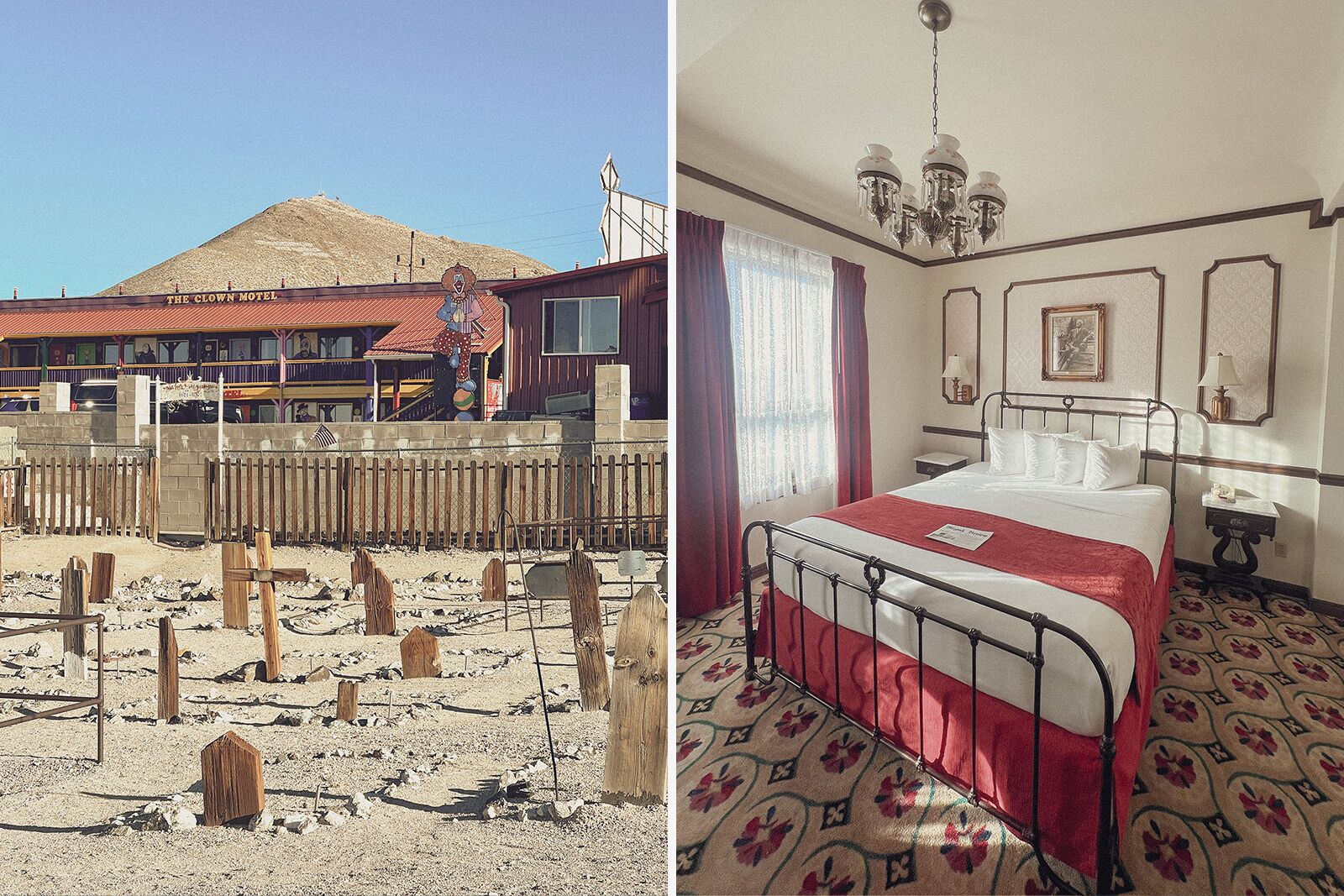
Left: Old Tonopah Cemetery and Clown Motel. Right: Mizpah Hotel room.Photos: David Duran
Leaving Virginia City, the road opens into long, uninterrupted desert stretches that invite reflection. By the time we reached Tonopah, the sense of isolation felt intentional. Once a booming mining town after a silver strike in 1900, Tonopah rose quickly and then faded just as fast.
We began at the Tonopah Historic Mining Park, where rusted machinery and exposed mine shafts offer a sobering look into how dangerous daily life once was. Standing there, it’s easy to understand why ghost stories persist. This was a place built on risk, hope, and frequent loss.
Our base for the night was the Mizpah Hotel, a five-story landmark built in 1907 that’s widely regarded as one of Nevada’s most haunted hotels. After dinner, we joined a guided hotel tour focused on the building’s most famous resident, the Lady in Red.
According to legend, she occupied much of the fifth floor, which also happened to be the floor where we were staying. During the tour, we learned that our room had once been part of her living quarters and that she was allegedly killed just outside the door. Hearing the story while standing in the hallway made the space feel heavy with history. Sleeping there afterward felt charged, whether or not anything followed us into the night.
Later, we visited the Old Tonopah Cemetery, where headstones quietly document epidemics, mining accidents, and frontier hardships. Just across the street, the Clown Motel delivers a sharp tonal shift. In addition to its infamous clown collection, the motel features themed rooms inspired by classic horror movie killers. It’s playful, unsettling, and oddly charming all at once.
Dinner at the Jack Dempsey Room inside the Mizpah Hotel grounded the evening, a return to warmth before the desert night closed in again.
Day 3: Goldfield, Rhyolite, and an overnight in Boulder City
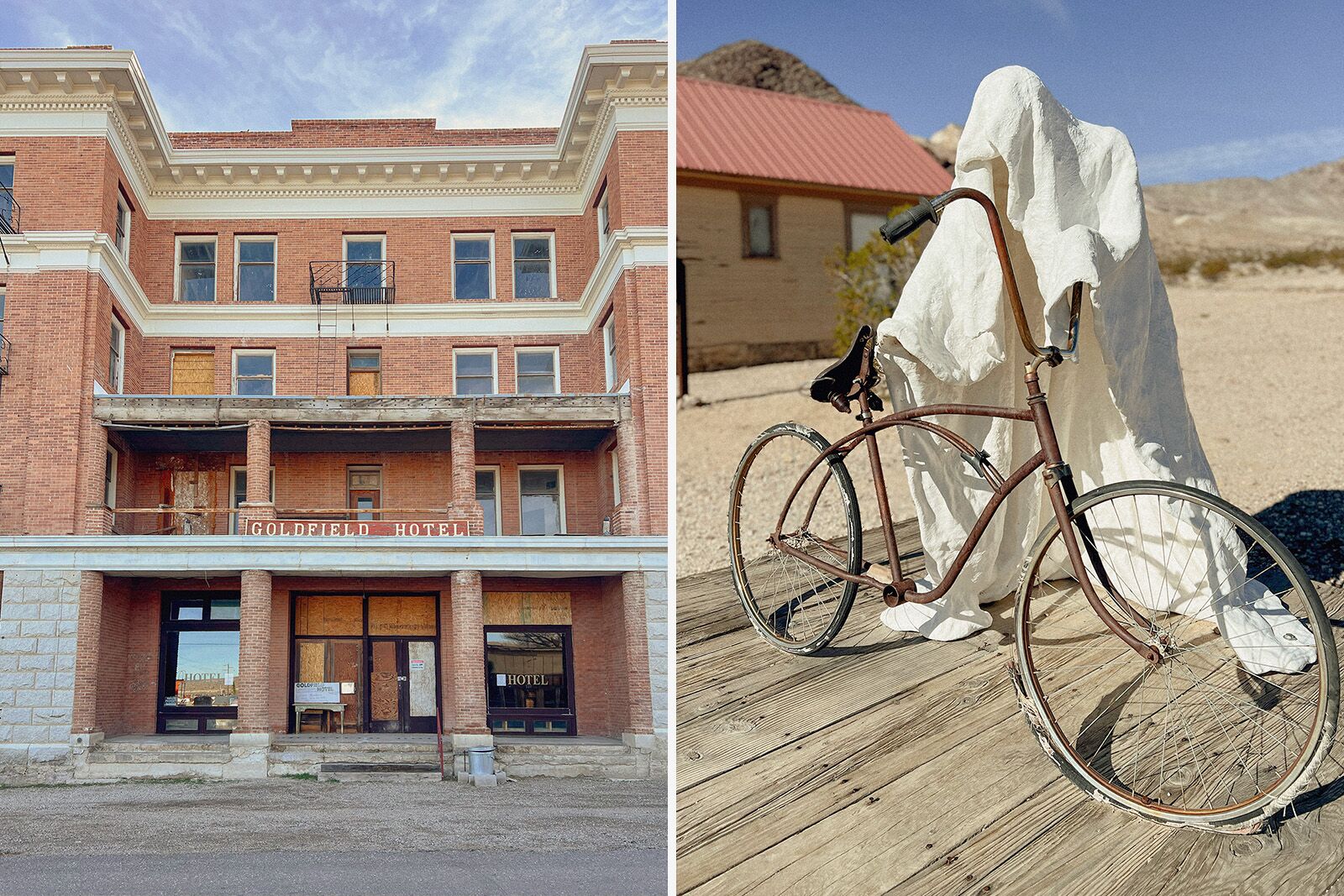
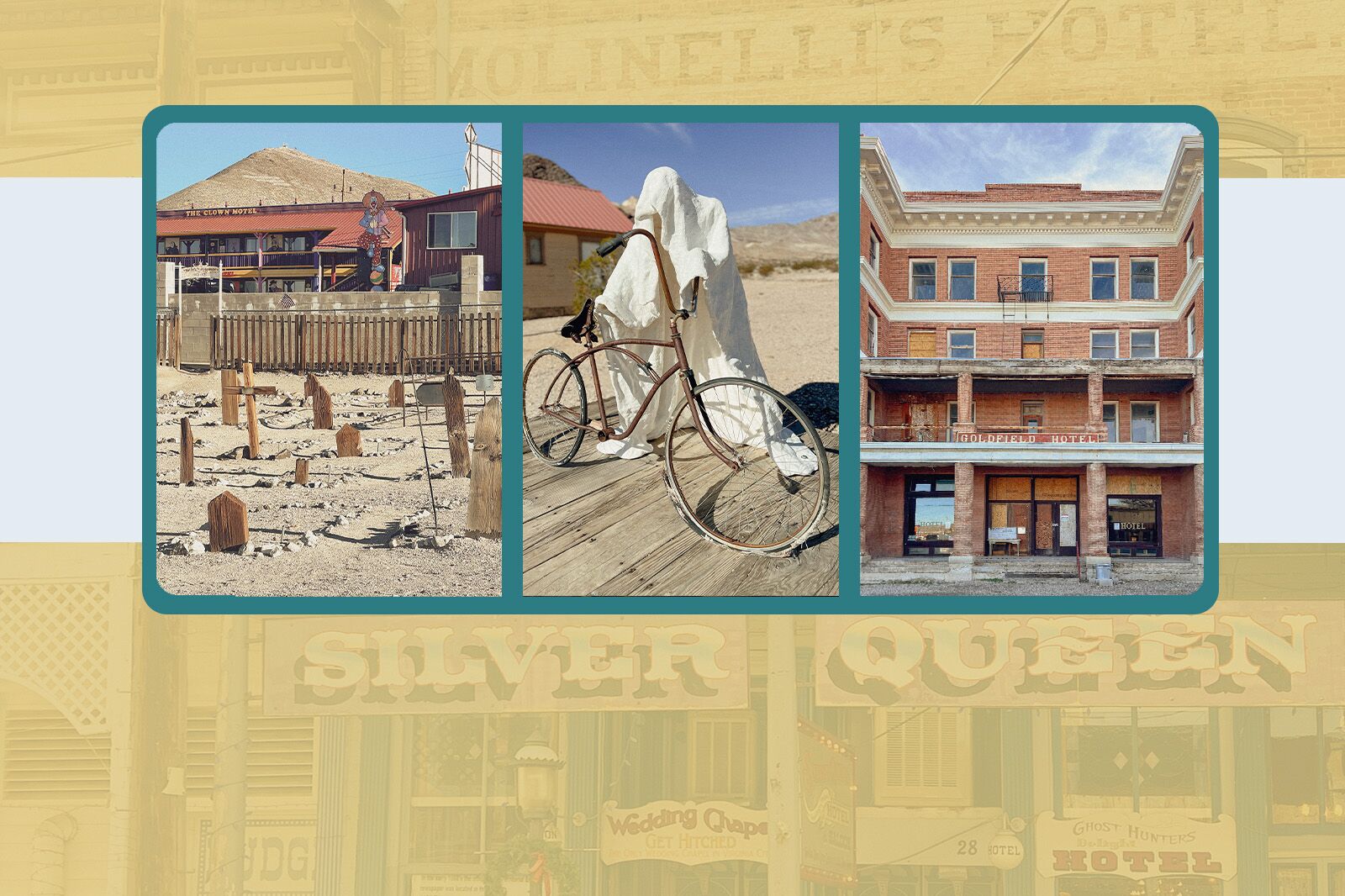
Left: Goldfield Hotel. Right: Goldwell Open Air Museum. Photos: David Duran
A short drive brought us to Goldfield, once Nevada’s largest city and now a near-perfect snapshot of decline. Walking through town feels like stepping into a paused moment in time.
At the Goldfield Historic Cemetery, some epitaphs are heartbreaking, while others are darkly humorous. One grave famously reads “Man Died Eating Library Paste,” a reminder that Nevada’s frontier spirit always carried a sharp edge of irony. Nearby, the abandoned Goldfield Hotel looms large, its faded grandeur hinting at a time when luxury arrived just as quickly as ruin.
After lunch in Beatty, we headed to the Goldwell Open Air Museum, where large-scale sculptures rise unexpectedly from the desert floor. Several of the installations resemble ghost-like figures, pale and towering against the landscape. The effect is eerie without being overt, fitting seamlessly into the tone of the trip.
Just minutes away, the Rhyolite Ghost Town feels suspended between ruin and rebirth. Crumbling structures frame the surrounding hills, and in the late afternoon light, the town feels less haunted than contemplative. It becomes a meditation on impermanence set against the vastness of the desert.
By evening, we made our way to Boulder City, stopping at Tom Devlin’s Monster Museum. Packed with movie monsters and special effects artistry, it works as a playful palate cleanser after days of real history and quiet decay.
We spent the night at the Boulder Dam Hotel, a historic property tied closely to the Hoover Dam and Howard Hughes. Its Art Deco details, hushed hallways, and proximity to one of the West’s greatest engineering feats made it a fitting final overnight, rooted in history while edging back toward the present.